



Can You Trust Your Test Results?
- August 3rd, 2026
- Category: Guest Posts, News & Events
This post was written by Zameer Syed, Head of Regional International Sales, Asia, Europe, Africa, and Asia-Pacific.
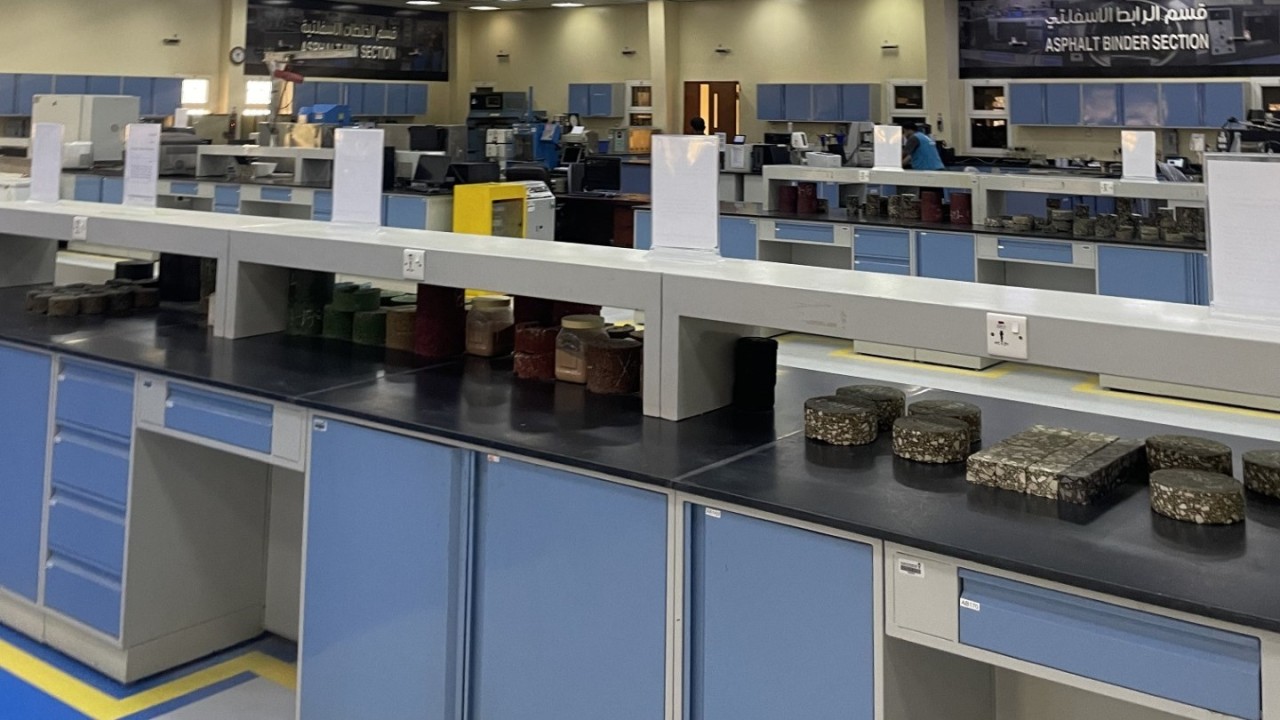
Last year I was visiting one of our customers in Saudi Arabia. Like much of the country, they were supporting major infrastructure projects linked to Vision 2030.
As we walked through the laboratory, the manager smiled and said, "The contractors are always waiting for the reports." He wasn't exaggerating. The pressure they were under was enormous. Every hour mattered. Contractors wanted results because on-site work often depended on them. Equipment downtime wasn't just a laboratory problem. It could affect the progress of an entire project. As we continued talking, he said something that has stayed with me.
"Producing the report isn't the difficult part. Making sure we are completely confident in it before we release it is."
I have thought about that conversation many times since.
After spending years working with contractors, universities, commercial laboratories and transportation agencies across Europe, the Middle East, Asia and Africa, I think that single sentence sums up our industry better than anything else.
Construction materials testing has never really been about producing reports. It has always been about giving people the confidence to make the next decision.
A laboratory report may only be a few pages long, but somebody is relying on every number on it. It could be an engineer approving a foundation, a consultant accepting a pavement layer, or a contractor deciding whether work can continue the next morning. When you think about it like that, the importance of reliable testing becomes obvious. People outside our industry often assume that if two laboratories follow the same ASTM or AASHTO standard, they should produce the same result. In reality, it isn't always that straightforward.
Can two good laboratories produce slightly different results?
Yes.
Does that automatically mean one of them is wrong?
Not necessarily.
The standard tells us what needs to be done. It cannot control how a sample was taken, whether it truly represents the material on site, how carefully it was prepared, or whether an experienced technician spotted something that didn't quite look right before the test even began.
Those are the things that rarely appear on a report, yet they often make the biggest difference.
One thing I have noticed over the years is that the laboratories I trust the most aren't always the biggest or the newest. They are usually the ones where people genuinely care about getting the answer right.
I have walked into laboratories with equipment that has been operating reliably for many years because it has been looked after properly. I have also visited impressive new facilities where technology was everywhere, but the laboratory still struggled because basic procedures weren't being followed consistently.
It reminds me that good equipment is important, but it has never been the whole story.
Working for Humboldt, people might expect me to say that the equipment is the most important part of any laboratory. What I've learned is that the best results come when exceptional equipment is paired with skilled technicians and sound laboratory practices. Reliable equipment should make good laboratories even better. It should improve repeatability, reduce operator variation, and help laboratories deal with increasing workloads. Whether it is an automated triaxial testing system, a concrete compression machine, an electrical density gauge, or an Asphalt Mixture Automated Testing System, the goal is really the same. Give laboratories dependable data they can have confidence in.
But equipment works best in laboratories where good habits already exist.
No machine can replace a technician who questions an unexpected result instead of simply accepting it.
No software can replace experience.
No standard can replace professional judgement.
That is something I have seen in every part of the world I have worked.
The demands on laboratories are changing though.
Projects are getting larger.
Specifications are becoming more demanding.
Clients expect results more quickly than ever before.
At the same time, many laboratories are finding it increasingly difficult to recruit experienced technicians while workloads continue to grow.
That is why conversations about automation have changed over the last few years.
They are no longer about replacing people.
They are about helping good people do their jobs more effectively.
The best laboratories I visit are not looking for ways to remove technicians from the process. They are looking for ways to remove unnecessary repetition, reduce the risk of human error, and allow experienced staff to spend more time doing what really matters: interpreting results, solving problems, and maintaining quality.
People sometimes ask me what the most important product in a laboratory is.
My answer usually surprises them.
It isn't a testing machine.
It is confidence.
Because that is what every laboratory really produces.
Confidence for the contractor.
Confidence for the consultant.
Confidence for the engineer.
Confidence for the client who will eventually own and maintain the asset.
Without that confidence, every decision becomes harder.
Working internationally has allowed me to meet some outstanding people in this industry. Although the projects, climates and specifications vary enormously from one country to another, I have found that the best laboratories all have one thing in common.
They never stop asking whether the result makes sense.
Not because somebody might audit them.
Not because the specification tells them to.
Because they understand what is at stake if they get it wrong.
Humboldt Mfg. Co. has been part of this industry since 1909. During that time, construction materials testing has changed beyond recognition. We have moved from manual testing equipment to digital systems, automation and laboratories that are becoming increasingly connected.
The technology will continue to evolve.
The responsibility will not.
Every road, runway, bridge and building begins with decisions made from laboratory data.
And before any report leaves the laboratory, there is still one question that matters more than any other.
Can you trust the result?