


Using a Continuous-Load Concrete Beam Breaker for Quality Control
- April 14th, 2026
- Category: Equipment Guides
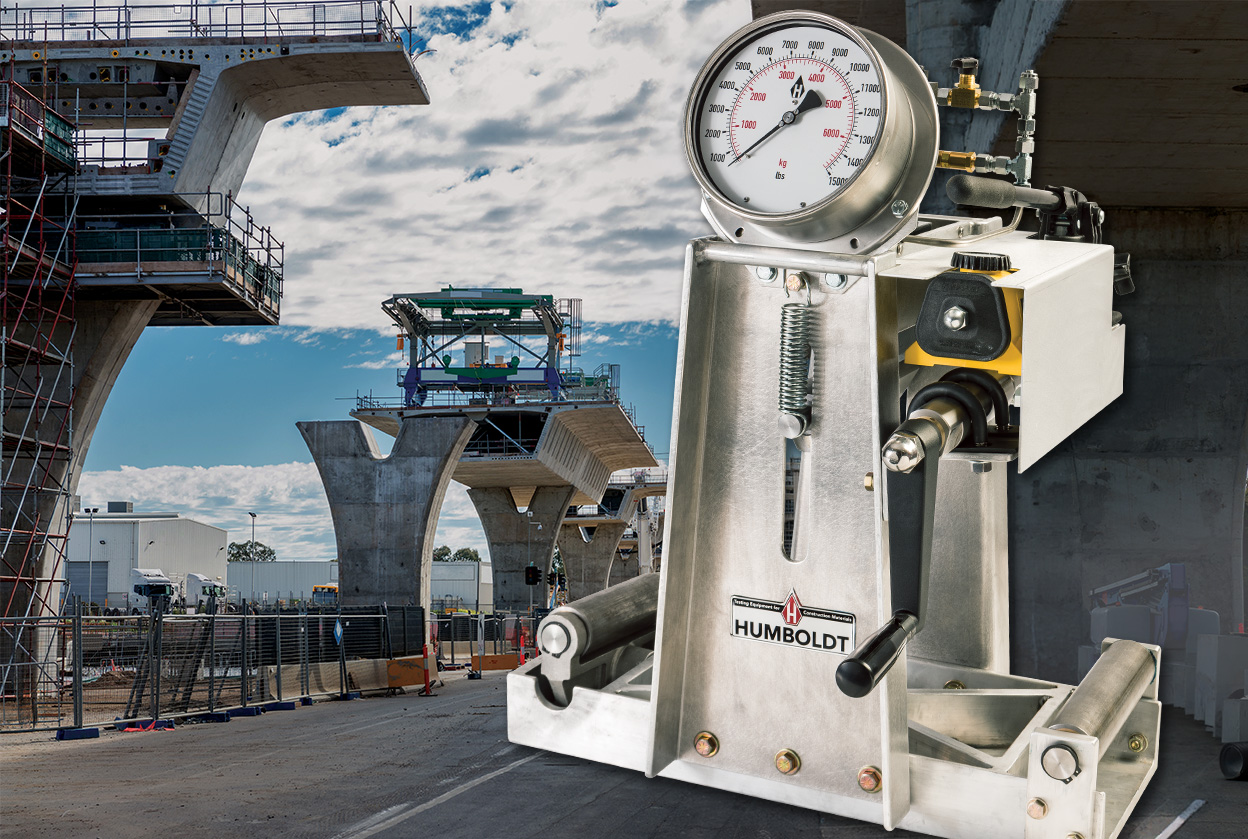
Why Continuous-Load Concrete Beam Breakers Are Essential for Modern Quality Control.
In today’s fast-paced construction and concrete production environments, accuracy, efficiency, and real-time decision-making are more important than ever. Continuous-load concrete beam breakers (also known as portable flexural beam testers) are becoming a critical tool for producers, contractors, and DOTs looking to improve quality control and streamline operations. These testers offer several advantages over flexural compression machines and compression testing with test cylinders.
What Is a Continuous-Load Beam Breaker?
A continuous-load beam breaker is designed to apply a steadily increasing load to standard concrete beam specimens (typically 4” or 6”) until failure in bending occurs.
Unlike traditional testing methods, these systems apply a smooth, uninterrupted load throughout the test cycle, ensuring:
- Accurate break-point detection
- Consistent, repeatable results
- Reduced operator variability
Key Advantages Over Traditional Compression Testing
While compression testing using cylinders has long been the industry standard, flexural testing with beam breakers offers several advantages:
1. More Representative Performance Data
Flexural strength (modulus of rupture) better reflects real-world conditions, especially for:
- Pavements
- Bridge decks
- Airport runways
2. Faster, On-Site Results
Beam breakers are:
- Smaller and more cost-effective than compression machines
- Portable for use near production sites
- Ideal for reducing specimen handling and speeding up results
3. Improved Accuracy and Consistency
Continuous-load testing eliminates inconsistencies caused by manual operation, ensuring:
- Reliable comparisons between samples
- Reduced human error
- Standard-compliant testing
Using Beam Breakers for Quality Control (QC)
Continuous-load beam breakers are especially valuable as real-time QC instruments in both field and plant operations.
They can help:
- Validate mix design (cement content, water-cement ratio, admixtures)
- Detect mix inconsistencies (overwatering, poor gradation, batching errors)
- Provide immediate pass/fail results for faster decision-making
Because of their portability and ease of use, they can be placed directly at production sites, allowing teams to make adjustments instantly.
Why Flexural Testing Matters
Many agencies, particularly Departments of Transportation (DOTs), prefer flexural testing because it provides:
- Better prediction of cracking resistance
- More accurate evaluation of long-term performance
- Direct measurement of load at failure (modulus of rupture)
- Compliance with center-point or third-point loading standards
Critical Applications in Construction
Flexural testing using beam breakers is commonly required or preferred in:
- Highway paving projects
- Airport slab construction
- Bridge deck installations
These applications demand precise performance data to ensure durability and safety.
Supporting Production & Construction Decisions
Beam breakers play a vital role in both production optimization and construction scheduling.
In Production:
- Optimize cycle times
- Monitor batch-to-batch consistency
- Adjust processes in real time
- Account for seasonal or temperature variations
In Construction:
- Determine early-age strength
- Decide when to strip forms
- Identify when the pavement can open to traffic
DOT Specifications and Acceptance Criteria
Many State DOTs, including the Illinois Department of Transportation (IDOT), are actively using or evaluating beam breakers for:
- Work acceptance
- Traffic opening decisions
- Pay factor calculations
Typical specifications include:
- Target flexural strength (e.g., 600–750 psi at 7–14 days)
- Minimum strength for opening to traffic (e.g., 400–550 psi)
- Defined testing frequency (per cubic yard, day, or lot)
Results are typically based on averages from multiple beams:
- Meets spec → Pass
- Slightly below → Pass with pay reduction
- Significantly below → Removal or investigation required
In some cases, test results directly impact project profitability, linking performance data to payment and scheduling.
Why Continuous-Load Beam Breakers Are the Future
As the industry moves toward smarter, data-driven construction practices, continuous-load beam breakers are becoming indispensable.
They provide:
- Real-time insights
- Greater testing accuracy
- Improved operational efficiency
- Better alignment with modern DOT requirements
For any operation focused on quality, speed, and reliability, investing in continuous-load beam breaker technology is a step toward more efficient and predictable outcomes.
Portable, Continuous-Load Beam Breakers Available From Humboldt
Humboldt’s portable concrete beam testers are a powerful quality control solution for contractors, DOTs, and consultants who need to quickly and accurately determine the flexural strength of concrete.
These hydraulically driven units use the center-point loading method, delivering continuous readings up to the beam-breaking point while retaining the maximum reading for accuracy. The gauge automatically resets to zero, allowing for efficient testing of multiple beams without lost data.
Built from lightweight aluminum, these beam breakers are extremely portable; ideal for use in plant environments or even the most remote job sites. Each unit is self-contained and designed to test 6” x 6” beams in 16” and 18” lengths with ease and precision.
Why Choose Humboldt Beam Breakers?
- Accurate flexural strength testing for QC applications
- Go/no-go decision capability based on specified strength values
- Accepted by numerous agencies, including the Illinois DOT
- Dual registration of modulus of rupture (15,000 lbf / 0–6,800 kgf)
- Factory calibrated using certified load cells for precise measurements
Each unit undergoes rigorous calibration at multiple points (including 10% FS and full scale), with averaged load cell readings ensuring dependable accuracy.
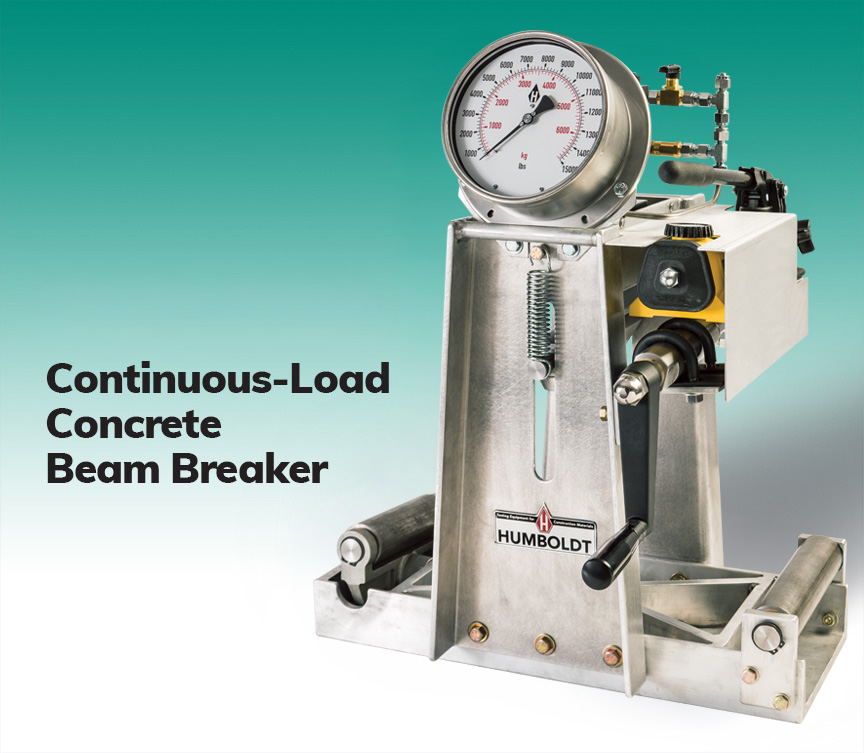
Available Models
Humboldt offers three hydraulically driven, continuous-load beam breaker models:
- H-3030CL – Single-point tester for 16" beams
- H-3032CL – Single-point tester for 18" beams
- H-3033CL – Third-point tester for 18" beams
- H-3031CL – Continuous-Load Concrete Beam Tester for 4" x 12" Beams
Whether you're improving quality control, meeting DOT specifications, or optimizing production efficiency, continuous-load beam breakers, especially portable solutions from Humboldt, provide the accuracy, flexibility, and reliability modern concrete testing demands.